About Us Our Works Updates Resources Support Us / Donate
Latest from WOYOMO

News & Updates

Stories, initiatives, and voices from the heart of our feminist movement for girls' rights and gender justice across Tanzania.

What's Happening

Read the latest initiatives, blog posts, calls to action, and voices from the WOYOMO community.

Period Poverty

More Than Blood

Blog 2026

More Than Blood: What Period Poverty Really Looks Like

MP
Monica Patrick · WOYOMO Founder

I was a teenager. I'd learned about menstruation in school, but as the first daughter, I had no older sister to turn to. That Monday morning, I woke up and realized I'd started my period. I had no money for sanitary pads.

Letters to Younger Sisters – WOYOMO Feminist Initiative
Initiative 2026

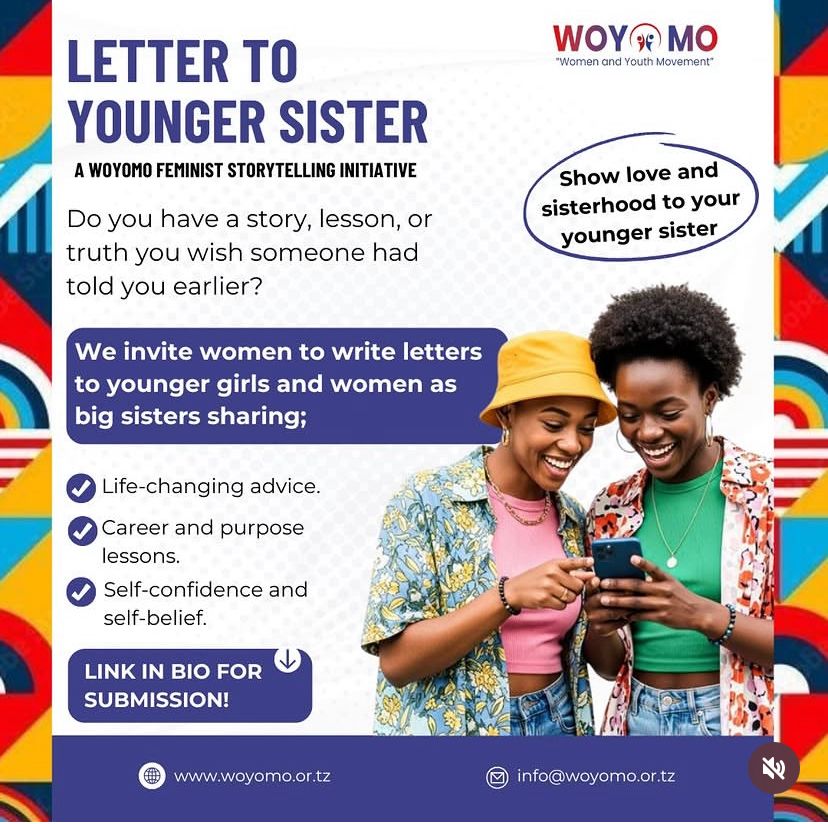
Letter to Younger Sister — A Feminist Storytelling Initiative

W
WOYOMO · Feminist Storytelling

Woyomo invites women to write honest letters to younger girls and women as big sisters — sharing life lessons, career guidance, experiences in activism, self-confidence, and personal growth.

Stand With Girls.
Fuel Our Mission.

"Passion Isn't a Paycheck": The Feminization of Unpaid Labor in Social Justice Work

"Passion Isn't a Paycheck": The Feminization of Unpaid Labor in Social Justice Work

It's 3pm, and I'm sitting here questioning whether I even deserve the title Executive Director.

Because truthfully — what kind of Executive Director has no salary, can't sustain herself, and is struggling to support others while running on empty?

This is my daily reality.

And I know I'm not the only one.

Some days I wonder: between me and our beneficiaries, who really needs the empowerment right now?

I'm leading an organization that's trying to shift lives, serve communities, and build futures — yet most days, I'm figuring out how to just survive.

I wake up thinking of new ways to motivate my team, even though I know deep down they're tired of volunteering. They deserve to be paid. They deserve structure, security, care.

But instead, we're all surviving on passion — and that's not sustainable.

Let's Be Honest

Passion has become a weapon used to justify underpaying (or never paying) people who do this work from the heart.

Especially women.

Especially grassroots leaders.

Especially those of us doing feminist work in communities where resources are scarce, and systems are stacked against us.

We're told we're "heroes" and "changemakers," but what we really are is exhausted.

Whoever said "Trust the Process"

I wish I could sit down with them and ask what they meant.

Because this process feels broken.

The process looks like this:

  • Rejection emails every week
  • Crafting perfect funding proposals — for free — only to be ignored
  • Spending days chasing donors who want beautiful reports, not the messy truth
  • Trying to keep the work alive with zero core funding, zero salaries, and zero relief

And all the while, people say, "you're doing such important work," like that's supposed to be enough.

Important Work Should Be Funded. Important work should be respected. Important work should not mean sacrificing our own mental health, stability, or dignity.

The truth is the unpaid labor of feminist leaders is not a coincidence, it's systemic.

A system that depends on our passion, our emotional labor, our unpaid hours — while refusing to build real structures to sustain us.

This is the feminization of unpaid labor in the nonprofit world.

Where women, especially from the Global South, are expected to lead movements, build solutions, manage communities — and do it all without expecting anything in return.

But I'm done calling that empowerment.

It's not.

We Need a Shift.

We need funding models that recognize leadership isn't just showing up — it's work.

And work deserves to be paid.

Support feminist leadership — fund the work that keeps girls' rights movements alive in Tanzania.

More Than Blood: What Period Poverty Really Looks Like

MORE THAN BLOOD: WHAT REALLY PERIOD POVERTY LOOKS LIKE?

Period Poverty Is Personal

As I sit here with my eyes closed, I'm taken back to eleven years ago the day I got my first period. I was a teenager. I'd learned about menstruation in school, but as the first daughter, I had no older sister to turn to. And I was too afraid to talk to my mother. That Monday morning, I woke up and realized I'd started my period. I had no money for sanitary pads. I searched my room, found a khanga, tore off a piece, folded it, and used it as a pad. I didn't know how to do it properly. It was bulky, uncomfortable, and painful. By the end of the day, I was sore, chafed, and emotionally drained.

That experience shaped how I viewed periods for years. Now, working in girls' empowerment, I've heard many stories far worse than mine. Girls using leaves, newspapers, rags, even cow dung because they can't afford pads. I've seen it in rural communities, but it doesn't stop there. Period poverty exists in cities, classrooms, offices everywhere. It's silent, but it's real.

One woman messaged me after I posted about this issue:

"I've ever experienced this. I was in my period, I had no money, and I was past the stage of asking my dad for help. It didn't even cross my mind. So I used socks and I felt so uncomfortable. I would really never wish myself to be in that situation."

She shared it with me. That hit me hard. This is not a rare experience, it's just rarely spoken about.

Let's Start with the Truth

  • In Tanzania, menstrual products are still taxed as luxury items.

Let that sink in.

  • Pads are treated like non-essential goods, yet they are a basic need for half the population.
  • This Value Added Tax (kodi ya pad) inflates prices, making pads unaffordable for many. For countless girls, this means skipping school, using unsafe alternatives, or suffering in silence.

This tax must go.

  • Removing it would be a powerful step toward equity, dignity, and opportunity for girls and women across Tanzania.

What Are We Teaching at Home?

  • Period poverty isn't just a policy issue it's a mindset issue. It begins with what we believe, what we teach, and what we stay silent about.

We need to ask ourselves:

  • Do our daughters feel safe talking about their periods?
  • Do our sons understand that menstruation is normal?
  • What are we saying directly or indirectly about periods in our homes?

Every shift begins at the family level. When we raise boys to respect, not shame, menstruation, we raise men who can support and not judge girls in school, women in the workplace, and their partners in daily life.

But here's the reality: most boys aren't raised that way. They grow up being told, directly or subtly, that periods are not their business.

They learn that menstruation is something "disgusting," "feminine," and "off-limits."

They're taught that real men don't talk about pads. Don't ask questions. Don't get involved.

As these boys grow into young men, they enter schools, communities, and friend groups that reinforce the same toxic message.

And if any man dares to speak up about menstruation or support it in any way he's ridiculed, labeled as weak, or dismissed as "not a real man."

This mindset creates generations of men who stay distant, silent, and sometimes harmful — men who look away instead of stepping up.

But this cycle can be broken.

When we bring men into the conversation early and intentionally we give them permission to care, to learn, to lead with empathy. We raise boys who will one day help their daughters buy pads without shame, advocate for policy change, and build workplaces where women don't have to hide when they're in pain.

Menstruation affects everyone because girls and women are everywhere — at home, in class, at work, in leadership.

We need men who understand that being part of the solution doesn't make them any less of a man. It makes them human.

To Funders and Changemakers

Menstruation may seem small to you but it's not small for the girls living it. Shame, discomfort, and missed opportunities are a daily reality for many.

Fund the work that matters!

Support movements providing pads, reproductive health education, and spaces where girls can understand their bodies and gain confidence.

At WOYOMO (Women and Youth Movement), we work closely with girls and young people through different programs, and one of our most recent projects, Health Spark, focuses on students and conversations around Sexual and Reproductive Health (SRH) including menstruation. We believe deeply in the power of just one sentence, one moment of guidance, to change the course of a girl's life.

And these conversations are not just for girls. We intentionally include boys and young men in these dialogues because menstruation is not just a "women's issue." Men are part of our daily lives as fathers, brothers, classmates, partners, colleagues, and leaders. They interact with our menstrual journeys at every stage — at home, in workplaces, in schools, in relationships, even on the street.

By involving men and boys, we help break down the stigma and shame surrounding periods. We teach them how they can support, not judge. How they can advocate for menstrual rights, how to create safe spaces for women to rest when they need to, and how to shift their mindsets away from ignorance or embarrassment toward understanding and empathy.

We're ready to partner with those who want to see real change.

If you want to be part of this movement, email us at: info@woyomo.or.tz

"If a pad can change a girl's day, what's stopping us from changing her world?"

Support menstrual health and dignity programs for girls across Tanzania.

Letters to Younger Sisters

Letter to Younger Sister — A Feminist Storytelling Initiative by Woyomo

Thank you for your interest in contributing to Letters to Younger Sisters, a feminist storytelling initiative by Woyomo.

This initiative invites women to write honest letters to younger girls and women as big sisters, sharing life lessons, career guidance, experiences in activism, self-confidence, and personal growth. These letters are meant to encourage, guide, and remind younger women that while the journey may not be easy, it is possible.

You do not need to be a public figure, a leader, or someone who has everything figured out. What matters most is your lived experience and your willingness to share it with care and honesty.

Your letter can be written to: your younger self, a younger sister, cousin, or friend, or the young woman who may need encouragement and guidance.

Why Participate?

  • Be the "big sister" someone needed.
  • Empower younger women with courage, confidence, and clarity.
  • Contribute to a growing collection of feminist knowledge and mentorship.
  • Help build a legacy of shared wisdom and intergenerational support.

What Can You Write About?

You may choose to focus on one or more of the following areas:

  • Life-changing lessons you learned along the way
  • Career, education, or purpose
  • Activism, advocacy, and using your voice
  • Building self-confidence and believing in yourself
  • Navigating challenges and continuing forward despite them

How Long Should It Be?

There is no required length. Your letter can be short or long, simple or detailed, as long as it is honest and written with care.

Confidentiality & Consent

All submissions will be treated with respect and confidentiality. You are free to submit your letter with your name or anonymously. Woyomo will only share your letter with your consent and will handle all stories with sensitivity and responsibility.

By submitting this form, you agree that your letter may be documented and shared through Woyomo's platforms (social media, website, or publications) for the purpose of empowering and inspiring young women.

Thank you for choosing to be the sister someone else needed.

Ready to share your story? Submit your letter and become a voice for the next generation of women.

Submit Your Letter